Is Home EV Charging Worth the Investment? 2026 Guide
Table of Contents
Is Home EV Charging Worth the Investment? The Financial Reality
Home EV Charger Installation Cost: What You Are Actually Paying For
What Is Included in a Standard Installation Package
Hidden Costs That Catch Homeowners Out
Home Charging vs Public Charging Costs: The Per-Mile Difference
Off-Peak Electricity Tariffs for EV Charging: The Biggest Saving Most Owners Miss
EV Charger Payback Period: When Does the Maths Turn in Your Favour?
When Home EV Charging Is Not Worth It
Conclusion: The Investment Case for Home Charging
Frequently Asked Questions
Last Updated: October 9, 2026
Is Home EV Charging Worth the Investment? The Financial Reality
For most drivers covering typical annual mileage, home EV charging is worth the investment because it cuts the cost per mile dramatically compared with public rapid charging, and it removes the weekly hassle of hunting for a working charge point. At Yorks Ev, we install domestic chargers across the region, and the question we hear most often is a simple one: does the maths actually work in my favour?
The honest answer is that it depends on three things: what you pay to have a charger fitted, what you pay for electricity at home, and how much you currently spend charging away from home. Get those three numbers right and the case is usually strong. Get them wrong and you can wait years to break even.
Below, we break down the real figures behind home EV charging, from installation costs to payback periods, so you can decide with your eyes open rather than on a salesman's promise. The key insight most guides miss is that the tariff you choose matters more than the hardware you buy.
Home EV Charger Installation Cost: What You Are Actually Paying For
A standard home charger installation covers the unit itself, the cabling, the protective devices, the labour and the VAT, assuming your existing supply and consumer unit can take the load without major work. That last assumption is where costs can shift.

What Is Included in a Standard Installation Package
A dependable fixed-price package should include the charger, all materials, the electrician's labour, the electrical certification, and VAT. At Yorks Ev, our standard supply and installation package covers all materials, labour and VAT, so the figure you are quoted is the figure you pay. We also complete installations within 14 days, and there is no travelling charge anywhere across the region.
Hidden Costs That Catch Homeowners Out
The costs that surprise people rarely involve the charger. They involve the house.
An older consumer unit that cannot take an additional high-load circuit
A long cable run from the meter position to where you actually park
Earthing arrangements that need upgrading before a charger can be fitted safely
A gravel or block-paved drive that has to be lifted and reinstated
A supply that needs a distribution network upgrade before work can start
Watch Out If a quote looks unusually cheap, ask what happens if your consumer unit needs replacing or the cable run is longer than expected. Those extras are where a low headline price quietly doubles.
A common mistake is comparing quotes on the headline number alone. Ask each installer what is excluded, not just what is included.
Home Charging vs Public Charging Costs: The Per-Mile Difference
Charging at home costs a fraction of what you pay at a public rapid charger, and the gap is widest when you charge overnight on a dedicated tariff. Public rapid charging is priced for speed and convenience, and you pay for both. Home charging is priced for energy, and that is all.
Efficient Alex
The comparison that matters is cost per mile, not cost per charge. A rapid charger might cost several times more per unit of electricity than your domestic rate, and the difference compounds across a year of driving. For a driver doing average mileage, that gap is the single biggest financial argument for fitting a charger at home.
Charging Method | Relative Cost | Convenience | Best For |
Home off-peak tariff | Lowest | Highest | Overnight top-ups, daily commuting |
Home standard tariff | Low | High | Drivers without a smart tariff |
Public rapid charger | Highest | Moderate | Long journeys, no home parking |
Workplace charging | Varies | High | Commuters with employer facilities |
If you cannot charge at home at all, you are locked into the most expensive column in that table for every mile you drive. That is the reality for drivers relying entirely on the public network.
Off-Peak Electricity Tariffs for EV Charging: The Biggest Saving Most Owners Miss
An off-peak electricity tariff is a pricing plan that charges a lower rate for power used during set overnight hours, and it is the single largest lever on your home charging costs. The hardware you install matters far less than the rate you pay for the electricity flowing through it.
Most drivers focus entirely on the charger and ignore the tariff. That is backwards. A smart charger scheduled to run during your supplier's cheapest window can cut your running costs substantially compared with charging at peak rates, and the saving repeats every single night.
Pro Tip Before you buy a charger, check what off-peak windows your supplier offers and whether your chosen unit can be scheduled to match them. A charger without scheduling is a charger that costs you money.
The practical step is straightforward: switch to a tariff with a genuine overnight window, then set your charger to run only within it. If your supplier offers an EV-specific plan, compare the peak rate too, because a cheap overnight rate often comes with a higher daytime one.
EV Charger Payback Period: When Does the Maths Turn in Your Favour?
The EV charger payback period is the time it takes for your savings on charging to cover the cost of buying and installing the unit. For most drivers who switch from public rapid charging to home off-peak charging, that period is measured in months rather than years, but the exact figure depends on your mileage and your tariff.
The calculation is simple. Take what you currently spend per mile on public charging, subtract what you would spend per mile at home, and multiply the difference by your annual mileage. That annual saving, divided into your installation cost, gives you the payback period in years.
If you drive a lot and currently rely on rapid chargers, the payback is fast. If you drive very little and already have cheap charging available elsewhere, it is slow. There is no universal number, and anyone who quotes you one without asking about your mileage is guessing.
Ofgem guidance on electricity tariffs and switching explains how off-peak pricing works and what to check before you switch supplier.
When Home EV Charging Is Not Worth It
Home EV charging is not worth it if you cannot park off-street, if your electricity supply cannot support a charger without expensive upgrades, or if you drive so little that the annual saving never covers the installation. Being honest about this saves you money.
Renters and flat dwellers often fall into the first category. Without a private driveway or a dedicated parking space you control, a home charger is not an option, and you are better served by workplace charging or a well-chosen public subscription. Homeowners with an old fuse box and a long cable run may find the upgrade work pushes the total cost beyond what the savings justify.
No off-street parking or dedicated space you control
A supply that needs a costly upgrade before installation
Very low annual mileage
Cheap charging already available at work
Key Takeaway The investment case for home charging rests on three numbers: your installation cost, your off-peak rate, and your annual mileage. If any one of them is unfavourable, get advice before committing.
Conclusion: The Investment Case for Home Charging
The challenge is not deciding whether home charging saves money; it is working out whether it saves enough in your specific circumstances to justify the upfront cost. For most drivers with off-street parking and average mileage, the answer is a clear yes, provided they pair the right charger with the right tariff.
At Yorks Ev, we handle the whole job: a fixed-price supply and installation package that includes all materials, labour and VAT, completed within 14 days by highly qualified, time-served electricians, with flexible payment options including Klarna and no travelling charge across the region.
Get a quote from Yorks Ev and find out exactly what home charging would cost you, with no hidden extras and no pressure.
Frequently Asked Questions
Is it cheaper to charge an electric car at home?
Charging at home costs significantly less than using public rapid chargers. Domestic electricity is charged at a lower rate per kilowatt-hour than commercial rapid charging networks, and the gap widens further if you switch to an off-peak tariff. Most EV owners who charge overnight at home pay a fraction of what they would spend at motorway services or supermarket rapid unit. The exact saving depends on your energy tariff and your car's efficiency, but home EV charging is almost always the cheaper option for regular charging.
How much does it cost to install a home EV charger?
The home EV charger installation cost depends on your property's wiring, the distance from your consumer unit to the charger location, and whether your electrical supply needs upgrading. A standard installation covering the unit, materials, labour and VAT is typically quoted as a fixed package. If your home requires additional work such as a new consumer unit or a longer cable run, expect the price to rise. Request a survey and fixed quote so you know the full cost before committing.
How long does it take for a home EV charger to pay for itself?
The EV charger payback period depends on how much you drive and what you currently pay for public charging. If you cover around 8,000 miles a year and shift most charging to an off-peak tariff, the saving per mile compared with rapid charging adds up quickly. Lower-mileage drivers take longer. The payback period shortens if you combine a cheap overnight tariff with a well-priced installation.
Can I charge an electric car at home without a dedicated charger?
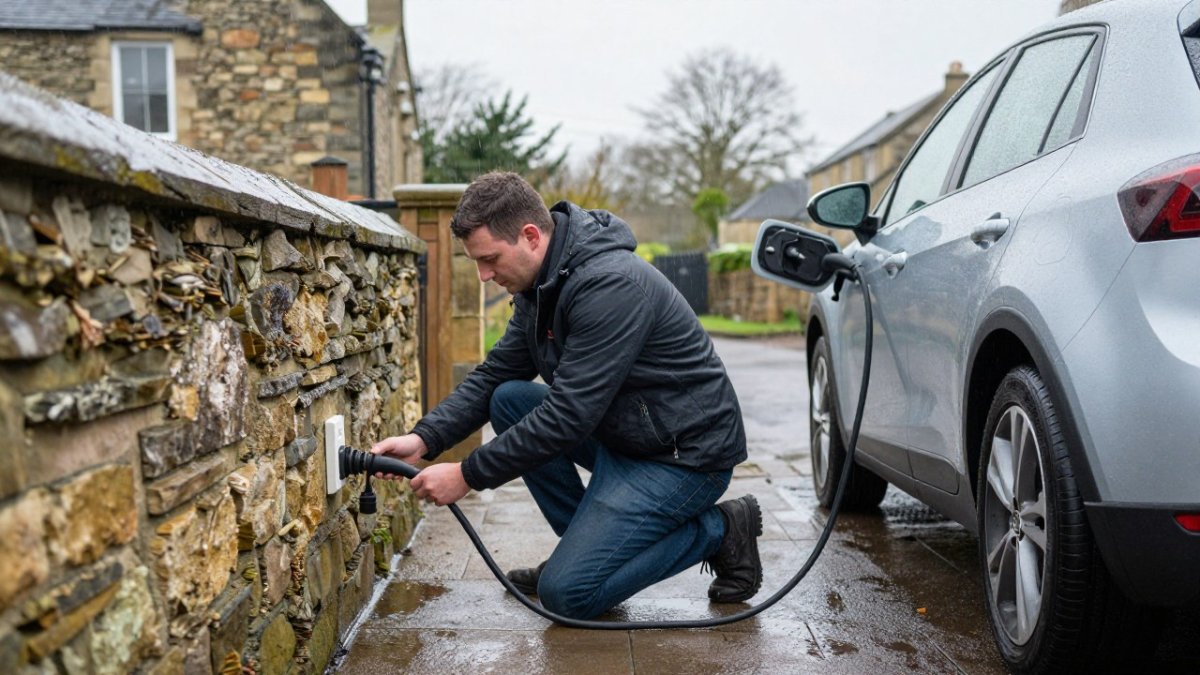
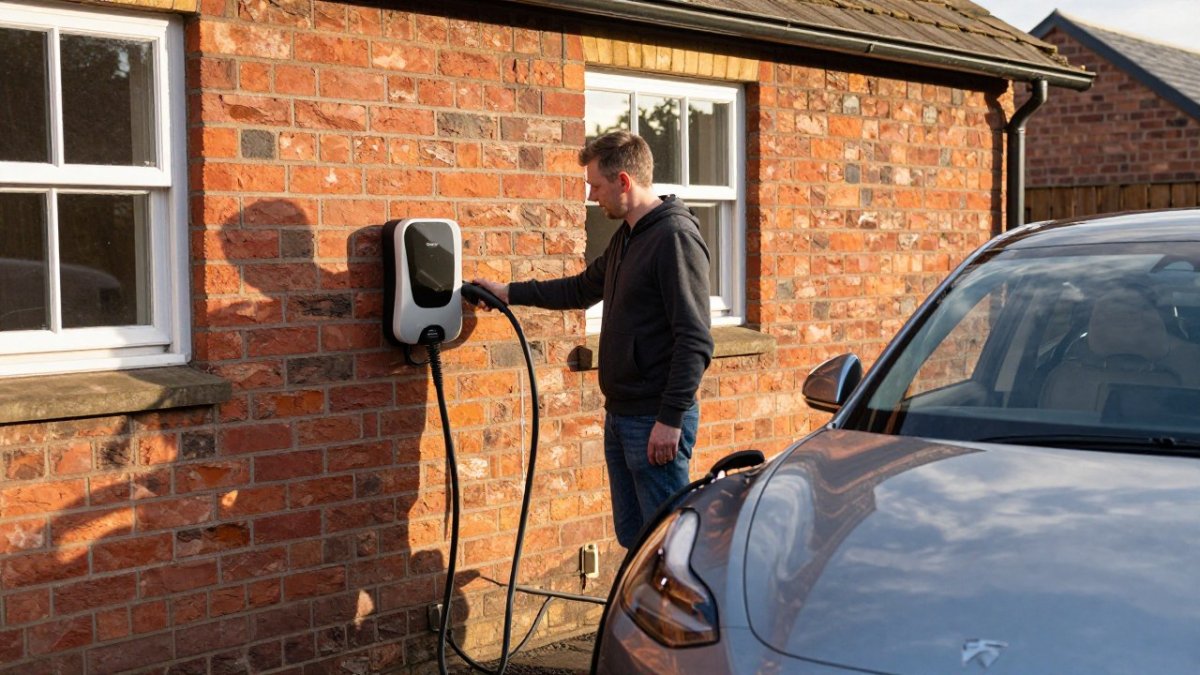
You can charge from a standard three-pin socket, but it is slow, typically adding only a few miles of range per hour, and sustained use puts strain on the socket and wiring. A dedicated home charger delivers a much faster charge, includes safety features such as residual current detection, and can be scheduled to run during off-peak windows. For anyone charging regularly, a proper wall-mounted unit is safer and more practical than relying on a domestic plug.
Get a Quote

Comments